
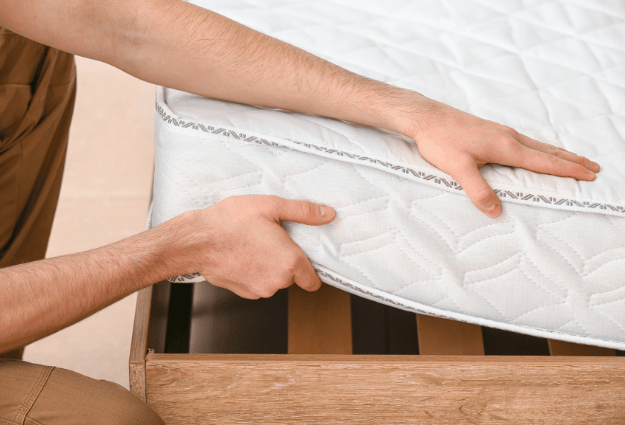
Whether you’re moving, renovating, downsizing, or just need to free up some space at home, knowing how to store a mattress the right way can make a big difference. A mattress is one of the most important investments you make for your comfort and health, and improper storage can lead to lasting damage. From mold and mildew to sagging and odors, a lot can go wrong if your mattress isn’t stored with care.
This step-by-step guide will walk you through everything you need to know to properly store your mattress so it stays clean, fresh, and ready for a good night’s sleep when you need it again.
TLDR
- Clean and dry your mattress thoroughly before storing it to prevent mold, stains, and odors.
- Use a breathable mattress bag sealed with packing tape to protect against dust, moisture, and pests without trapping humidity.
- Store your mattress flat in a climate-controlled unit to preserve its internal structure and avoid damage from temperature swings.
- Check on your mattress every few months to make sure the cover is intact, and the storage environment is still dry and clean.
Ready to Store Your Mattress the Right Way?
Don’t let your mattress lose its comfort and support while sitting in a garage or spare room. A proper storage unit gives your mattress the protection it deserves with a clean, dry, and secure environment. Dell RV & Mini Storage in Walla Walla offers a range of unit sizes to fit your needs, whether you’re storing a single mattress or an entire household of belongings. Reserve your unit today and give your mattress the care it needs until you’re ready to use it again.
Why Proper Mattress Storage Matters
A mattress might seem durable, but its materials are surprisingly sensitive to the environment. Without proper storage, you risk exposing your mattress to moisture, dust mites, mold, and structural damage that can shorten its lifespan and affect your sleep quality.
Avoiding Structural Damage and Mold Growth
The internal structure of a mattress is designed to support your body evenly. If stored incorrectly, the springs, foam layers, and support systems can warp or break down. Excess moisture in a poorly ventilated area can also lead to mold growth, which is not only damaging to the mattress but can also pose serious health risks.
Choosing the right storage environment is just as important as how you prepare the mattress itself. Facilities that prioritize security and cleanliness, like those where self-storage units are safe and secure, give you peace of mind that your belongings are well-protected.
Protecting Your Investment for a Better Night’s Sleep
A quality mattress can cost hundreds or even thousands of dollars. Taking the time to store it correctly now means you won’t have to replace it later. When you’re ready to pull it out of storage, you want a mattress that still feels and performs like the day you bought it.
How to Prepare Your Mattress for Storage
Preparation is the most important part of mattress storage. Skipping these steps can lead to stains, unpleasant odors, and material breakdown while your mattress sits in storage.
Clean the Mattress Surface Thoroughly
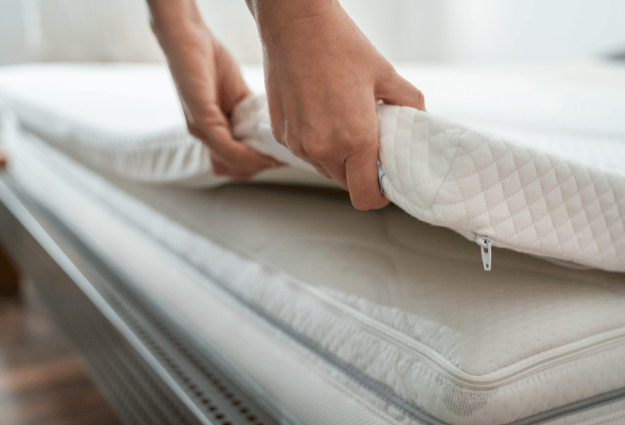
Before you wrap anything up, give your mattress a deep clean. Start by stripping all bedding, including any mattress protectors or mattress topper layers. Use a vacuum with an upholstery attachment to remove dust, dirt, hair, and debris from the entire mattress surface. Pay close attention to seams and crevices where particles tend to collect.
If there are any visible stains, spot clean stains with a gentle detergent mixed with water. Gently dab the affected areas with a clean cloth rather than rubbing, which can push the stain deeper into the materials. For odor control, lightly sprinkle baking soda across the top of the mattress, let it sit for 15 to 30 minutes, and then vacuum it up. This helps neutralize any lingering smells before your mattress goes into storage.
Let It Dry Completely Before Wrapping
This step is critical. After cleaning, allow your mattress to dry completely in a well-ventilated room before sealing it in any kind of cover. Any leftover moisture can trap moisture inside the wrapping, creating the perfect breeding ground for mold and mildew. If possible, stand the mattress up near a fan or open window to speed up the drying process. Give it several hours, or even a full day if you used a lot of liquid during cleaning.
Use a Mattress Bag or Protective Cover
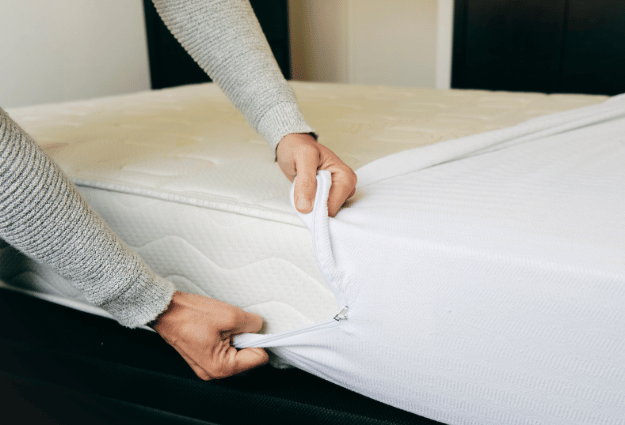
Once your mattress is clean and dry, it’s time to wrap it up. A high-quality mattress bag is the best option for protecting your mattress during transport and while it’s in storage. These bags are specifically designed to shield against dust, dirt, moisture, and pests.
When selecting a mattress cover, look for one made from breathable plastic or breathable covers rather than standard plastic wrap. A completely sealed plastic cover can trap humidity inside and cause the same moisture problems you’re trying to prevent. Breathable materials allow air to pass through while still keeping out contaminants.
For more guidance on wrapping and protecting stored items, check out our packing tips for long-term storage.
Best Ways to Wrap and Protect Your Mattress
Getting the wrapping right is essential to keeping your mattress in great shape. Here’s what you need to know about choosing materials and sealing your mattress properly.
Choosing Between Breathable Plastic and Breathable Covers
As mentioned, breathable materials are your best friend. Standard plastic sheeting can lock in humidity and lead to mold, mildew, and unpleasant odors over time. A breathable mattress bag allows air circulation while still forming a protective barrier against dust, pests, and dirt.
If you’re using a protective cover that isn’t a purpose-made mattress bag, make sure the material is designed to allow some airflow. The goal is to protect your mattress without creating a sealed environment that encourages moisture buildup.
Sealing With Packing Tape (and Why to Skip the Duct Tape)
Once your mattress is inside its bag or cover, seal the opening securely with packing tape. Packing tape holds well and removes cleanly, which means it won’t leave sticky residue on your mattress or the bag.
Avoid using duct tape directly on the mattress or on breathable materials. Duct tape can leave a stubborn residue that’s difficult to remove, and its strong adhesive can damage fabric or tear breathable covers. Stick with packing tape for a clean, reliable seal.
Where to Store a Mattress Correctly
Where you place your mattress matters just as much as how you prepare it. The right storage environment helps maintain airflow, prevent moisture damage, and protect the mattress from extreme temperatures.
Why a Climate-Controlled Unit Is Ideal
A climate-controlled unit is the gold standard for mattress storage. These units regulate temperature and humidity levels, which protect sensitive materials like foam, fabric, and adhesives from breaking down. Temperature fluctuations and high humidity are two of the biggest threats to a stored mattress, and a climate-controlled environment takes both of those concerns off the table.
If you’re considering this option, learn more about climate-controlled storage and how it can benefit items like mattresses, furniture, and other sensitive belongings.
Keep the Mattress Flat and Off the Floor
Whenever possible, store your mattress flat rather than on its side. Storing a mattress flat mimics its natural resting position and helps prevent the internal materials from shifting or compressing unevenly. If the mattress stays on its side for a long time, the filling can bunch up and create permanent lumps or sags.
Place the mattress on a clean, flat surface and make sure it doesn’t rest directly on the floor. Placing it directly on a concrete or bare floor can expose it to moisture and cold, both of which can encourage mold. Use a pallet, a sheet of plywood, or even a clean tarp to create a barrier between the mattress and the floor.
Maintain Airflow and Air Circulation
Good air circulation is key to preventing moisture buildup around your mattress. Make sure the mattress isn’t pressed tightly against walls or stacked beneath heavy items. Leave a small gap around the mattress so air can move freely. If your storage unit allows it, try to maintain airflow by keeping items loosely arranged rather than packed in tightly.
A unit with enough space around your stored items goes a long way toward keeping everything fresh. If you’re looking for the right fit, explore our mini storage units in Walla Walla to find a size that gives your mattress the room it needs.
Storing Different Mattress Types
Not all mattresses are built the same, and different types require slightly different care when being placed into storage.
Memory Foam and Mattress Toppers
Memory foam mattresses and toppers are especially sensitive to heat and moisture. Extreme temperatures can cause the foam to soften, harden, or lose its shape permanently. This makes a climate-controlled environment even more important for memory foam products. Always store a memory foam mattress flat, and never place heavy items on top of it, as the foam can develop permanent indentations under sustained pressure.
Why You Should Avoid Folding Most Mattresses
It can be tempting to fold a mattress to save space, but for most mattress types, this is a bad idea. You should avoid folding innerspring and hybrid mattresses entirely, as folding can bend or break the internal coils and cause irreversible structural damage. Memory foam mattresses have a bit more flexibility, but they shouldn’t be kept folded for more than a few weeks at the absolute most.
If you have limited space, it’s better to invest in a storage unit that offers enough space to lay your mattress flat than to risk ruining it by folding or bending it.
Tips for Transporting Your Mattress to Storage
Getting your mattress safely from your home to a storage unit is just as important as how you store it once it’s there.
Using a Covered Truck for Safe Transport
Always transport your mattress in a covered truck or enclosed vehicle. An open truck bed or trailer exposes the mattress to wind, rain, road debris, and dirt, all of which can damage or soil it before it even reaches the storage facility. Secure the mattress upright or flat in the truck bed using straps or ropes to prevent shifting during the drive.
If you’re transporting other belongings alongside your mattress, make sure nothing heavy is placed on top of it. Stack lighter, softer items around it instead. For advice on packing and organizing your items for the move, our guide on how to store furniture in a storage unit offers helpful tips that apply to mattresses, too.

How Long Can You Store a Mattress?
With the right preparation and storage options, a mattress can be stored for several months or even longer without significant wear. The key factors are cleanliness, a dry location, stable temperature, and protection from pests and dust.
If you’re planning to store your mattress for an extended period, it’s a good idea to check on it every few months. Open the unit, inspect the mattress bag for any tears or condensation, and make sure the mattress stays clean and dry. This quick checkup can help you catch small problems before they become big ones.
Frequently Asked Questions About Mattress Storage
Can I store a mattress in a spare bedroom or closet?
Yes, a spare bedroom or closet works for short-term storage, as long as the space is clean, dry, and free from pests. The key concern with storing mattresses at home is that rooms without much air circulation can still accumulate moisture over time. If you’re storing the mattress for more than a few months, a dedicated storage unit with proper ventilation is a better option to keep it in top shape.
How do I get rid of unpleasant odors before storing my mattress?
Start by vacuuming the entire surface, then sprinkle baking soda generously across it and let it sit for at least 15 to 30 minutes before vacuuming it off. For tougher smells, you can lightly mist the mattress with a mixture of water and white vinegar, then let it air dry in a well-ventilated space. Make sure the mattress is completely odor-free and dry before wrapping it in a mattress bag or protective cover.
Do I need to disassemble my bed frame before storing?
While this guide focuses on storing the mattress itself, if you’re also storing your bed frame, it’s a good idea to disassemble it to save space and prevent damage to both pieces. Keep all hardware in a labeled bag so reassembly is easy later. If you need help organizing all of your stored items efficiently, take a look at our storage unit organization ideas for practical tips.
What if I only have limited space in my storage unit?
If your unit is on the smaller side, you can store a mattress on its side temporarily, but try to keep this to a minimum. Prolonged side storage can affect the internal structure. Make sure other belongings aren’t leaning against or pressing on the mattress. If possible, choosing a slightly larger unit is worth it to ensure the mattress stays flat and has adequate space around it.
Can I store other belongings on top of my mattress?
It’s best to avoid stacking items directly on top of your mattress. Even moderate weight over time can compress the foam or springs, leading to permanent dents and reduced comfort. If you must place something on top, keep it lightweight and distribute the weight as evenly as possible across the mattress surface.
How often should I check on my mattress in storage?
Plan to inspect your mattress every two to three months. Check for any signs of moisture, mold, pest activity, or damage to the mattress bag. This is also a good time to briefly air it out if possible. Regular checkups help catch issues early and ensure your mattress is ready to use whenever you need it.


